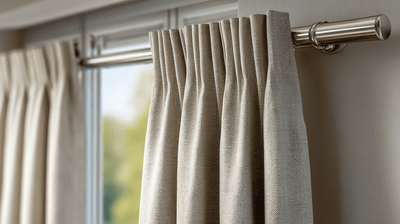
Measuring drapes is simple once you focus on three things: width, height, and fullness. Most measuring mistakes happen because the wrong reference point is used, measuring the window instead of the rod, guessing the length, or underestimating how much fabric is needed for proper coverage. The key is starting with curtain width based on your rod or track, then measuring height from the exact point where the drape will hang. Fullness ties everything together, shaping how structured or relaxed the drapes look once installed. When these three elements are measured correctly, drapes hang evenly, open smoothly, and feel intentional rather than flat, skimpy, or ill-fitting.
Drape Measurement Cheat Sheet
Getting drape measurements right comes down to using the correct reference points and simple calculations.
Width
- Measure the rod or track, not the window
- Total drape width = rod width × fullness
- Standard drape fullness is 1.5x to 2x
Height
- Measure from the top of where the drape hangs
- Starting point depends on the heading style, rings, grommets, hooks, or track carriers
- Choose your finish, sill length, apron length, floor length, or puddle
Fullness
- Fullness controls how structured or flat drapes look
- Heavier or lined drapes usually need more fullness
- Built-in pleated styles may already include fullness
These three measurements work together. Width controls coverage, height controls the drop, and fullness determines how tailored the finished drapes will look. Here are some popular drapery material options to consider once your measurements are finalized.


How to Measure for Drapes
Accurate drape measurements are essential for achieving proper coverage, balanced proportions, and smooth operation. Before choosing panel sizes or styles, it is important to understand how width, fullness, and hanging position work together to determine the final look.
Step 1: Measure Drape Width
Always start with width. This determines how much fabric coverage you need and how the drapes will open and stack. Measure the width of your curtain rod or track from end to end, excluding decorative finials. This measurement, not the window frame, is the correct reference point for drape width. Drapes should extend past the window opening on both sides so they can fully clear the glass when open and allow in maximum light.

When selecting curtain panels for windows, base all width calculations on the rod or track measurement. Measuring only the window often results in drapes that feel too narrow. Leave enough space on each side for the drapes to stack neatly, especially when using rings or other curtain hardware and accessories that add bulk.
Step 2: Determine Drape Fullness
Fullness refers to how much fabric is used relative to the rod width and plays a major role in how tailored the drapes look.
Most drapes work best with 1.5x to 2x fullness. Heavier or lined drapes usually benefit from closer to 2x fullness, while lighter fabrics may require less. Some pleated drapery styles already include built-in fullness, which reduces the amount of extra fabric needed.

Width formula
Total drape width = rod width × fullness
After calculating the total width, divide it by the width of each panel to determine how many panels are needed. Selecting the correct number of curtain panels for width and fullness helps achieve even coverage and a clean finish. This same approach applies when working with fabric curtain panels for decorative or non-traditional installations.
Step 3: Measure Drape Height
Drape height should always be measured from the top of where the drape actually hangs, not from the rod itself. The correct starting point depends on the drapery style.
- Grommet drapes: measure from the top inside edge of the grommet
- Clip rings: measure from the bottom of the ring
- Pinch pleat drapes with hooks: measure from the hook insertion point
- Track systems: measure from the carrier or hook

When using curtain clips and rings or other curtain hanging accessories, measuring from the correct hanging point ensures the drapes fall evenly and do not sit too high or too low.
Next, choose your desired length style:
- Sill length
- Apron length
- Floor length
- Puddle length
Curtain Rod Placement Tips
Rod placement has a direct impact on how drapes hang, open, and frame the window. Even properly measured drapes can look off if the rod is positioned too low or too narrow.
- Mount the rod higher than the window frame to create the illusion of taller ceilings and allow drapes to fall in a longer, cleaner line.
- Extend the rod wider than the window opening so drapes can stack fully open without blocking light or covering the glass.
- Account for rings, brackets, and other curtain hardware and accessories, which add depth and affect how far the drapes sit from the wall.
Correct placement supports accurate measurements and helps drapes open smoothly, stack neatly, and look balanced once installed.
Measuring Drapes for Wide Windows and Decorative Backdrops
Wide windows, sliding doors, and decorative installations follow the same measuring principles as standard drapes. The difference is scale, not method. Start by measuring the full span, then apply fullness to achieve proper coverage and a balanced look.
- Measure the total width of the span, not individual window sections.
- Apply the same fullness rule, typically 1.5x to 2x, to avoid flat or stretched-looking drapes.
- Divide the total width by panel size to determine how many panels are needed for even coverage.
For decorative setups, backdrop curtains typically require generous fullness to create a gathered, professional finish rather than a flat drop. For structured installations, pipe and drape curtains are measured by total width and finished height, then supported using pipe and drape kits or a pipe and drape backdrop system to maintain consistent spacing and alignment.
Putting It All Together
Measuring drapes is all about order and accuracy, width first based on the rod or track, fullness to ensure proper fabric coverage, and height measured from the exact hanging point. When these three elements work together, drapes hang evenly, open smoothly, and look intentional rather than skimpy or awkward. Whether you are measuring for everyday windows or planning decorative installations like decorative curtain backdrops and sequin backdrop curtains, taking the time to measure correctly upfront leads to a cleaner, more polished result.