Small weddings are not about cutting corners. They are about making deliberate choices. With fewer guests in the room, every detail becomes more noticeable, from the way people are seated to how the space feels once everyone settles in. There is no pressure to overdecorate or follow traditions that do not fit. Instead, thoughtful event decor, meaningful party favors, and design elements that serve a purpose tend to matter more than sheer volume.
Designing a small wedding means focusing on connection, flow, and details guests actually interact with. Simple tablescapes, intentional lighting, and even well-chosen fake flowers can shape the atmosphere without overwhelming the space. When the layout is considered and the mood is relaxed, the celebration feels personal rather than pared down. These small wedding ideas are meant to help you create a day that feels thoughtful, beautiful, and memorable, without trying to make it bigger than it needs to be.
1. Trim Your Guest List and Keep the Day Focused

One of the biggest advantages of a small wedding is clarity. With a tighter guest list, you are not juggling obligations or rushing conversations. Every person there feels chosen, and that alone sets the tone for the entire day. The result is a celebration that feels relaxed instead of overwhelming.
2. Rethink the Ceremony Layout for a More Intimate Feel

Traditional straight-row seating can feel formal and distant, especially in a small space. Circular seating, semi-circles, or even standing ceremonies bring guests closer and create a shared moment instead of a staged one. When everyone feels physically closer, the ceremony naturally feels more emotional and connected.
3. Host a Single Long Table Instead of Multiple Rounds
A single long table instantly makes a small wedding feel communal. It encourages conversation, simplifies the layout, and creates one clear focal point for the reception instead of scattering attention across the room. Rather than spreading decor across multiple tables, you concentrate your effort into one beautifully styled setup that anchors the entire space.

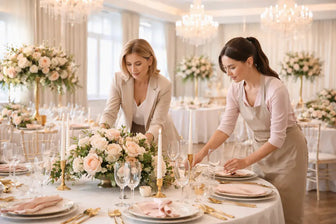
This approach also allows couples to be more intentional with their styling. With fewer surfaces to decorate, it becomes easier to invest in details guests interact with the most, such as table linens, runners, place settings, and candles. The goal is not more decor, but higher impact from fewer elements.
4. Serve Dinner Family-Style

Family-style meals work especially well with long tables. Shared platters encourage conversation, eliminate the stop-start feel of plated service, and make the reception feel more like a dinner party than a formal event. It also keeps guests engaged with each other instead of waiting on a schedule.
5. Let Lighting Do the Heavy Lifting

Lighting can transform even the simplest space. Warm candlelight, string lights, or soft overhead lighting define the atmosphere without adding visual clutter. In small weddings, lighting often does more for mood than elaborate decor ever could, especially as the evening settles in.
6. Skip the Stage and Keep Everything Grounded

Raised stages or platforms can create unnecessary distance between the couple and their guests. Keeping the ceremony and reception at eye level helps the celebration feel shared rather than observed. Guests feel like they are part of the moment instead of watching it happen.
7. Repurpose Ceremony Decor for the Reception

One of the smartest small wedding ideas is letting decor do double duty. Ceremony arches can become sweetheart table backdrops. Florals from the aisle can move to the reception tables. This keeps the visual story cohesive while avoiding excess or waste.
8. Create a Sweetheart Table Instead of a Head Table

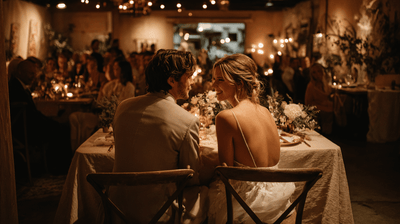
A sweetheart table gives the couple a quiet moment together without separating them too much from their guests. It also eliminates awkward empty seats that often happen with head tables at small weddings. Styled simply, it becomes a natural focal point without overpowering the room.
9. Use a Simple Backdrop to Frame Key Moments

A lightweight fabric backdrop or clean wall styling can help frame the ceremony, sweetheart table, or speeches. This adds visual structure without overwhelming the space and works especially well for photos in smaller venues.
10. Focus on Texture Instead of More Decor

When space is limited, texture becomes more important than quantity. Soft linens, flowing runners, glass elements, and candlelight add depth without clutter. These details photograph beautifully and make the setup feel intentional rather than overdone.
11. Keep Florals Minimal and Intentional

Large floral installations are not necessary for a small wedding. Bud vases, greenery, or a few statement arrangements keep the look fresh and balanced. Minimal florals also allow other design elements, like the table or lighting, to stand out.
12. Personalize Place Settings With One Thoughtful Detail

Handwritten notes, custom menus, or a simple name card at each seat can make guests feel genuinely welcomed. These small details often leave a bigger impression than elaborate favors or displays.
13. Create a Cozy Lounge Area

A small lounge area gives guests a place to relax, chat, and naturally break into smaller conversations. Even a few chairs and a rug can shift the energy of the space and make the reception feel more like a gathering than an event.
14. Design the Timeline Around Connection, Not Formality

With fewer guests, there is less pressure to rush from one moment to the next. You can extend dinner, allow speeches to unfold naturally, and give space for conversations. A slower pace often becomes one of the most memorable parts of a small wedding.
15. Let Empty Space Be Part of the Design

Not every corner needs to be filled. Empty space gives breathing room and allows the decor you do choose to stand out. In small weddings, restraint is often what makes the setting feel refined rather than sparse.
A Small Wedding, Done Well
A small wedding is not about doing less. It is about choosing what truly matters and designing around it. When the space, flow, and details are intentional, the celebration feels personal, effortless, and memorable in ways a larger event often cannot.