Choosing a Venue That Supports Styling
The best venue for a wedding is one that supports styling rather than relying on its architecture alone. Event decorators and DIY brides should evaluate a venue based on how easily décor can be installed, adjusted, and scaled.
A venue is easier to style when it has:
- A clean, open layout with minimal pillars or awkward dead space
- Ceiling height and hanging rules that allow flexible styling solutions
- Consistent table sizes that work well with tablecloths and round tablecloths
- Chairs that can be upgraded using chair covers or a chair sash
- Lighting that enhances table settings and centerpieces rather than overpowering them
- Décor rules that allow freestanding elements like backdrop drape
- Setup access that supports efficient installation using décor from a wholesale party supplier
Choosing a venue for a wedding is not just about location or capacity. For event decorators, designers, and hands-on DIY brides, the real decision is how easily the space can be styled. A venue that cooperates with décor saves time, reduces styling costs, and produces better visual results. This guide explains how to choose a wedding venue using professional styling logic rather than planning trends.
Start With Layout, Not Aesthetics
From a stylist’s perspective, layout matters more than how a venue looks in photos. Open floor plans are easier to style than spaces broken up by pillars, awkward corners, or uneven walls.
Problem areas often require corrective décor to look intentional. Empty walls, long corridors, and asymmetrical spaces usually benefit from a backdrop drape or fabric panels to create structure. The fewer layout problems a venue has, the less décor is needed to make the space feel cohesive.
Key takeaway: Choose a venue with a clean layout to reduce corrective styling.

Ceiling Height and Hanging Rules Determine Design Limits
Ceiling height directly affects how décor performs visually. Low ceilings limit vertical installations and tall designs, while high ceilings require larger-scale décor or the space will feel empty.
Hanging restrictions are just as important. Many venues prohibit rigging, drilling, or ceiling attachments. When hanging décor is not allowed, styling relies on freestanding solutions such as arches, vertical backdrops, and tall centerpieces to create height without violating venue rules.
Key takeaway: Always confirm ceiling height and hanging permissions before finalizing a design plan.
Table Size and Shape Should Influence Your Venue Choice
Table inventory quietly determines how polished or chaotic a wedding setup will look. It is not just a logistics detail, it is a visual foundation.

Many venues offer a mix of table sizes and shapes. When tables vary too much, styling becomes inconsistent and harder to control. Different dimensions affect linen drop lengths, centerpiece scale, and guest spacing, which is how visual imbalance sneaks in.
Why round tables are easier to style
- Round tables create uniform sightlines across the room
- They pair cleanly with standard round tablecloths
- Floor-length round tablecloths hide mismatched table legs and worn furniture
- Centerpieces stay visually centered and proportional
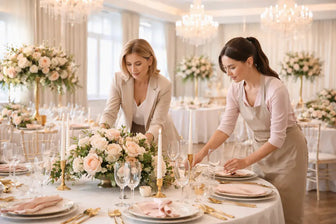
When tables are consistent, styling becomes repeatable. The same tablecloth size, the same centerpiece design, the same spacing. This is what makes a venue feel intentionally designed rather than patched together.
Chairs Are a Visual Element, Not Just Seating
Chairs have a major visual impact on how a venue feels, yet they are often overlooked during venue selection. Worn, mismatched, or bulky chairs can break visual flow and make an otherwise styled space feel unfinished. Venues that allow chair styling give you more control over consistency, especially in large rooms where seating repeats across the entire layout.
Chair covers are one of the fastest ways to standardize seating. A neutral, well-fitted cover creates a clean visual base, hides mismatched chairs, and photographs evenly from every angle.


Because chairs appear in every photo and line of sight, improving them has an outsized effect. A single chair cover style can unify the ceremony and reception without adding complex décor or increasing setup time.
Key takeaway: Venues that allow chair covers are easier to style, easier to scale, and easier to make look polished.
Lighting Is the First Issue Professional Decorators Address
Venue lighting is rarely designed for event styling or photography. Overhead lighting is often harsh, uneven, or the wrong color temperature.
Layered lighting improves atmosphere and defines focal points. Soft lighting enhances table settings and centerpieces, while accent lighting helps large venues feel more intimate. Venues that allow lighting adjustments or supplemental lighting provide greater styling flexibility.
Key takeaway: Lighting control affects both ambiance and photo quality.
Blank Canvas vs Finished Venues Have Different Styling Costs
Blank canvas venues offer creative freedom but require more décor to define the space. Finished venues typically need fewer pieces but allow less customization.

Blank spaces often require more tablecloths, centerpieces, and structural décor. Finished venues benefit from cohesive linens and carefully chosen accents rather than volume. The right choice depends on how much control is needed versus how much décor will be sourced.
Key takeaway: Styling effort and décor volume vary by venue type.
What DIY Brides Should Confirm Before Booking a Venue
DIY brides should evaluate venues using practical, execution-focused criteria:
- Table sizes and quantities
- Chair condition and style
- Setup and teardown access hours
- Available power sources
- Storage or staging areas
These details determine how easily décor can be installed without professional assistance.
Key takeaway: Practical access details matter as much as aesthetics.
Choosing a Venue That Works With a Wholesale Party Supplier
Event decorators and DIY brides benefit from venues that support scalable, consistent styling. When décor rules are flexible, it becomes easier to source matching quantities from a wholesale party supplier and use coordinated tablecloths, chair covers, chair sashes, backdrop drape, and centerpieces to create a unified look across tables, seating, and focal areas without relying on custom rentals.
Key takeaway: Venue flexibility maximizes the value of wholesale décor sourcing.
The Best Wedding Venues Are the Ones You Can Style With Confidence
A successful wedding setup does not depend on choosing the most expensive venue. It depends on selecting a space that supports décor execution. When layout, lighting, and venue rules align with a styling plan, even simple venues can be transformed effectively. Thoughtful use of tablecloths, chair styling, centerpieces, and draping allows decorators and DIY brides to create polished results with confidence.